



ミル圧延
/Inside AGC for Strip Mills: What Matters in 2025 If you work around mills long enough, you develop an instinct for what makes a line hum. The leap from “good” to “world‑class” often starts with a dependable automatic gauge control cold rolling mill package—fast hydraulics, sane algorithms, and a team that will tune at 2 a.m. on a Saturday if needed. YWLX’s Agc System For Hot/Cold Strip Rolling Mill is one I’ve seen in the field more than once—and, to be honest, it’s earned a reputation for practical accuracy rather than brochure-ware. Industry snapshot and why it matters Two macro trends: thinner gauges with tougher alloys, and greener operations with fewer unplanned roll changes. In fact, many customers say the biggest payoff from AGC lately is scrap avoidance and coil-to-coil consistency. With smarter feed-forward models, we’re seeing better head-end catch and fewer tail-end surprises. It seems that hybrid mass‑flow + roll‑force models are winning, with flatness integration creeping in as lines digitize. YWLX at a glance Origin: No.1518, LAR Valley Int’l, Guangwai Avenue, Xicheng District, Beijing, 100055. YWLX has been on AGC since 2003; their systems run across hot/cold strip mills, temper and skin‑pass lines at home and overseas. The pitch is straightforward: precise strip gauge with serviceable hardware and field‑savvy commissioning. Typical specifications (real-world use may vary) Product Agc System For Hot/Cold Strip Rolling Mill Control modes Feed‑forward, mass‑flow, roll‑force (BISRA‑type), adaptive feedback, mill‑stretch compensation Thickness accuracy ≈ ±6–12 μm on cold strip at stable speeds; ±0.5–1.0% typical Sampling/response Controller loop ≤1 ms; HGC cylinder step response ≈ 10–20 ms Sensors X‑ray/Isotope thickness gauges, load cells, speed encoders, thermal/roll crowning inputs Interfaces Ethernet/IP, Profinet, OPC UA; legacy I/O supported Service life Main control racks 10–15 years; servo valves 5–7 years (typical duty) Certifications ISO 9001 QMS; CE; EMC per IEC 61000‑6‑2/4; safety concept aligned with IEC 61508 Process flow, materials, and testing Materials: low‑carbon steels, HSLA, stainless, aluminum strip. Methods: head‑end feed‑forward from entry gauge and roll gap model; closed‑loop feedback via exit gauge; mass‑flow blending during transients; roll‑force model correction for temperature and mill stretch. Testing standards customers reference: EN 10131 (cold‑rolled flatness/tolerances), ISO 9445 (cold‑rolled narrow strip), ASTM A568/A568M (sheet tolerances), and plant EMC/safety audits per IEC 61000 and IEC 61508. Acceptance test snapshot (a recent cold‑mill retrofit): Cpk for thickness ≥1.67 on 0.25–0.35 mm gauge; coil yield up by ≈0.8%; off‑gauge length cut by ≈18% over four weeks. Not perfect, but solid. Where it’s used Cold tandem mills, single‑stand reverse mills, temper mills, skin‑pass lines, and hot strip finishing stands. In packaging steel and battery foil, the automatic gauge control cold rolling mill loop must stay tight during speed ramps—this is where tuned feed‑forward earns its keep. Vendor comparison (indicative) Vendor Core approach Typical accuracy Retrofit Lead time YWLX Mass‑flow + roll‑force, adaptive tuning ±6–12 μm (cold) High; legacy signals supported ≈ 8–16 weeks ABB Integrated gauge/flatness suite ±5–10 μm High ≈ 12–24 weeks Primetals Model predictive + flatness integration ±5–10 μm Medium‑High ≈ 16–28 weeks Note: figures are indicative; actuals depend on mill stiffness, gauges, rolls, and, frankly, how well the commissioning week goes. Customization and integration YWLX offers retrofits with existing X‑ray/Isotope gauges, load cells, and older PLCs. Options: coil recipe databases, Smart start/stop logic, and data hooks to MES/ERP via OPC UA. For legacy stands, cylinder and servo‑valve upgrades usually unlock the last mile of automatic gauge control cold rolling mill performance. Field notes and feedback A stamper in Southeast Asia told me their temper mill finally “stopped chasing its tail” after AGC tuning—off‑gauge complaints dropped by about a third. Another stainless producer reported smoother head/tail transitions and fewer coil reclassifications. Not every line hits the same numbers, but the direction is consistent. References IEC 61000-6-2/6-4 Electromagnetic compatibility standards for industrial environments. IEC 61508 Functional safety of electrical/electronic/programmable electronic systems. EN 10131 Cold rolled uncoated low carbon steel flat products – tolerances. ISO 9445 Cold‑rolled stainless steel narrow strip – tolerances. ASTM A568/A568M Standard Specification for Steel, Sheet, Carbon, and High‑Strength, Low‑Alloy.

We have successfully executed over 500
projects around the world,
many first-of-their-kind
research projects and products in China, including
We have successfully executed over 500
projects around the world,
many first-of-their-kind
research projects and products in China, including
-
2004
The 1st hydraulic AGC system for hot rolling of ribbon steel
-
2006
The 1st AFC system used for 1450mm skin pass mill
-
2009
The 1st 5-stand tandem line with 2-stand POR & Uncoiler for 650mm ribbon steel
-
2012
The 1st reversing mill for 1380mm strip
-
2016
The 1st soft-rolling system used in skin pass mill
-
2019
The 1st fully automated medium-width tandem cold rolling mill
-
2021
The 1st 5000KN Twin-stand double skin pass mill
-
2022
The 1st coupled pickling line & tandem cold mill with two modes - big roller & small roller
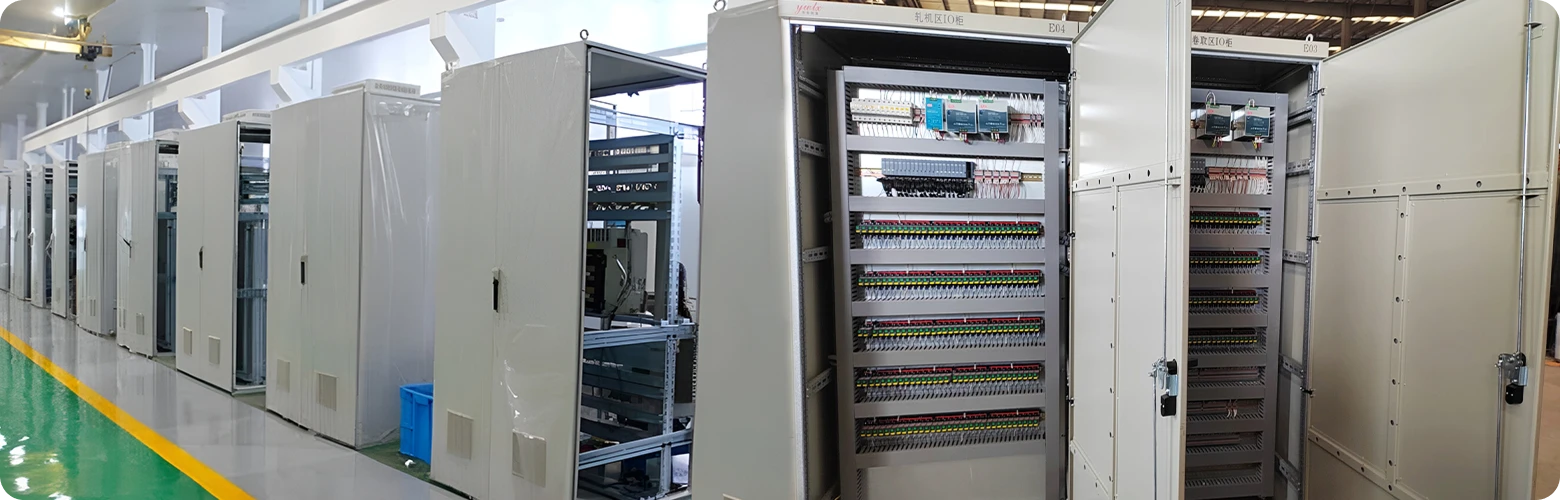
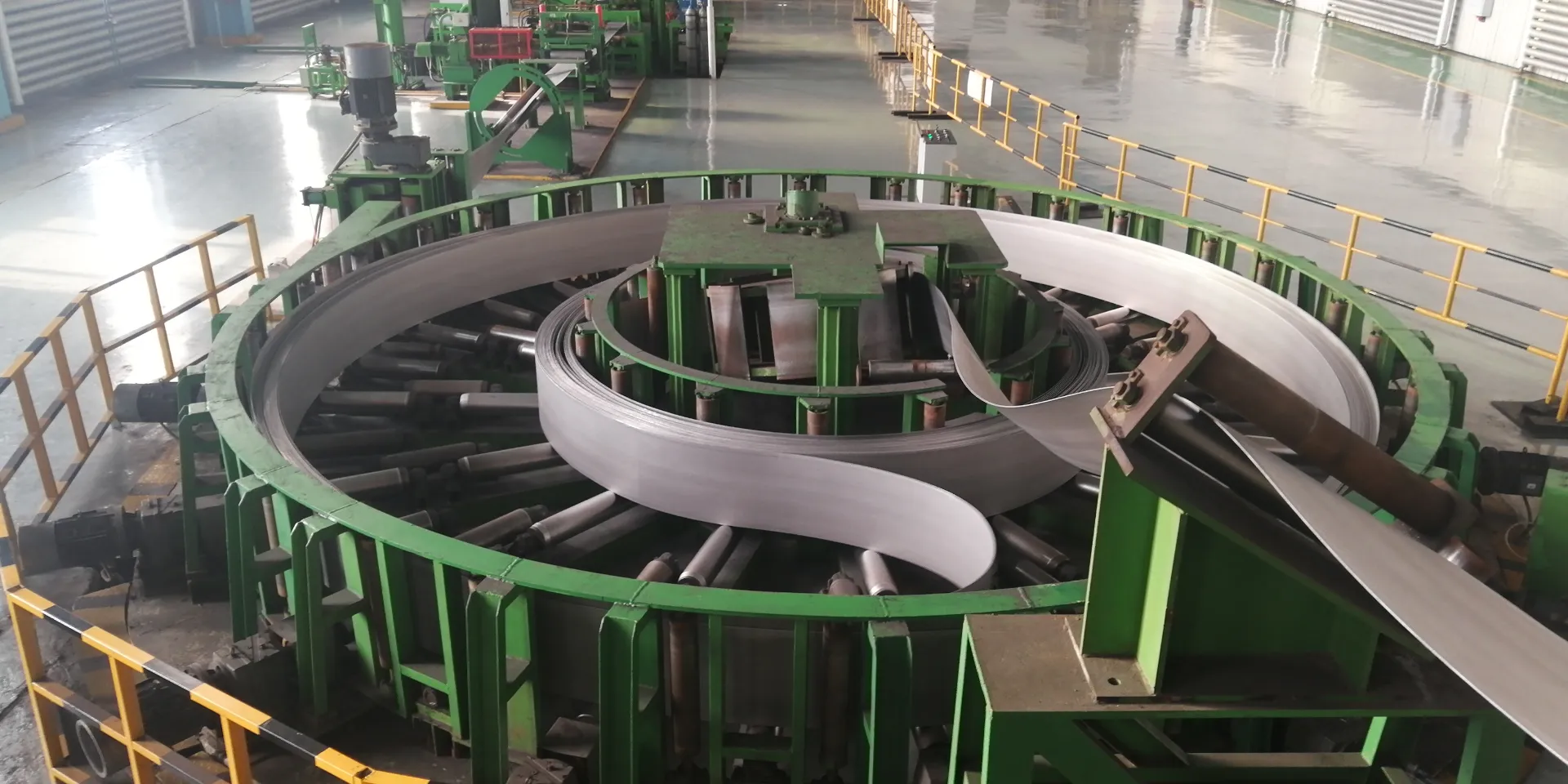
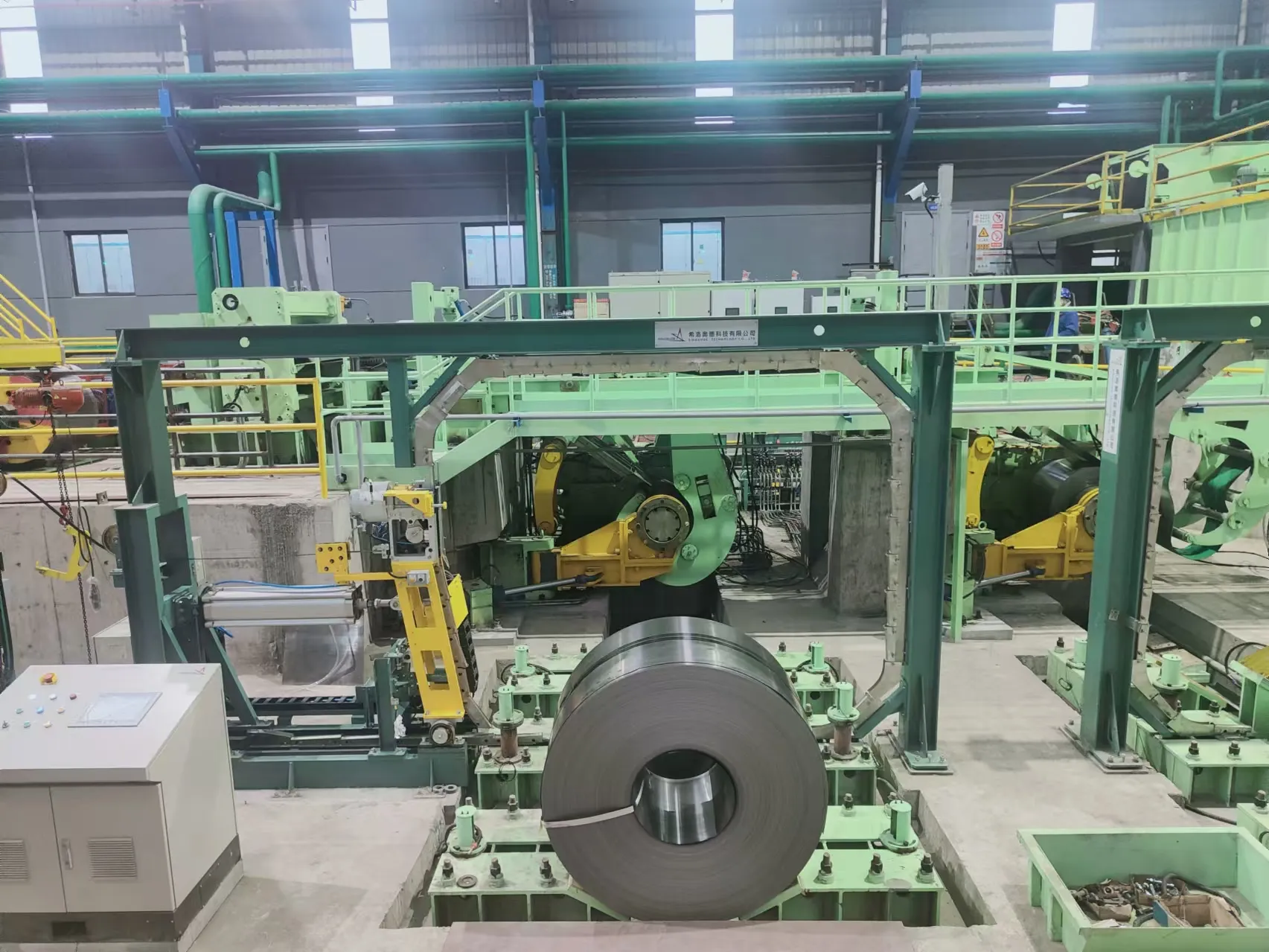
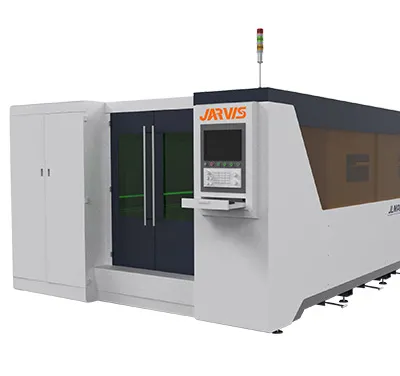
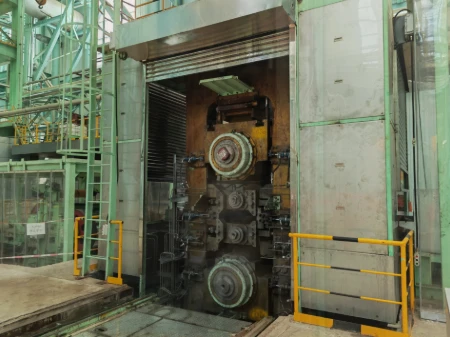
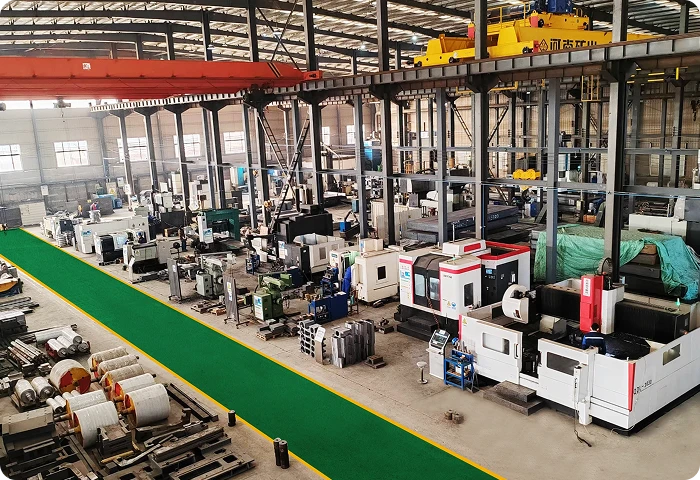
Yang Wang Li Xin operates a state-of-the-art facility over 66,000 square meters,and our manufacturing facility is fully equipped with high-tech machinery and high-capacity cranes. This enables us to handle large work pieces measuring 4.5m in width, 10m in length, and 1.5m in height, guaranteeing our capacity to produce 1800mm skin-pass mills and 1450mm rolling mills. The individual piece can weigh up to 100 tons.

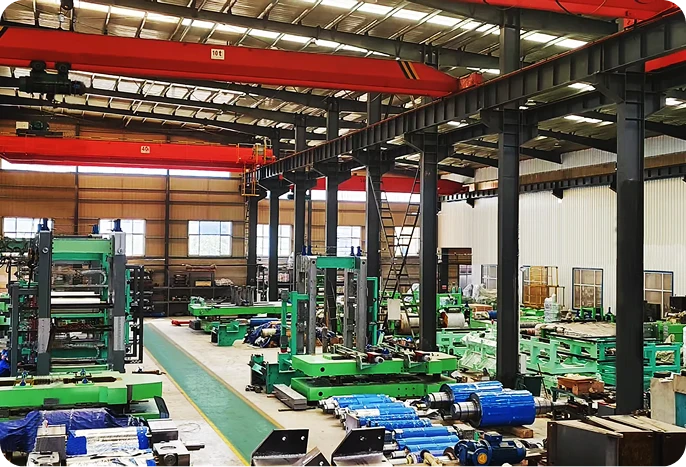

Quality is fundamental to the enterprise survival. We have established a comprehensive and meticulous quality management system and have successfully obtained ISO14000 certification. Starting from the design source, it supervises the entire production cycle, including design, procurement, processing, assembly, in-factory testing, installation, and online commissioning. The workshop is equipped with measuring tools like vernier calipers, spectrometers, hardness testers, and ultrasonic flaw detectors. They are used to check materials and control tolerances to ensure the final equipment meets or exceeds requirements. All products have a unique code, This enables the easy identification and traceability of the equipment components and ensures full control of quality.


-
 Reversing Rolling Mill | High Precision & ProductivityReversing Rolling Mill is a key solution in the manufacturing industry, specifically within Special Equipment Manufacturing Industry and Manufacturing of metallurgical specialized equipment. This article explores how Beijing Yang Wang Li Xin Sci&Tech Co.,Ltd. supports professionals with durable, high-performance products, and explains why this product is an ideal choice for businesses in these se
 -
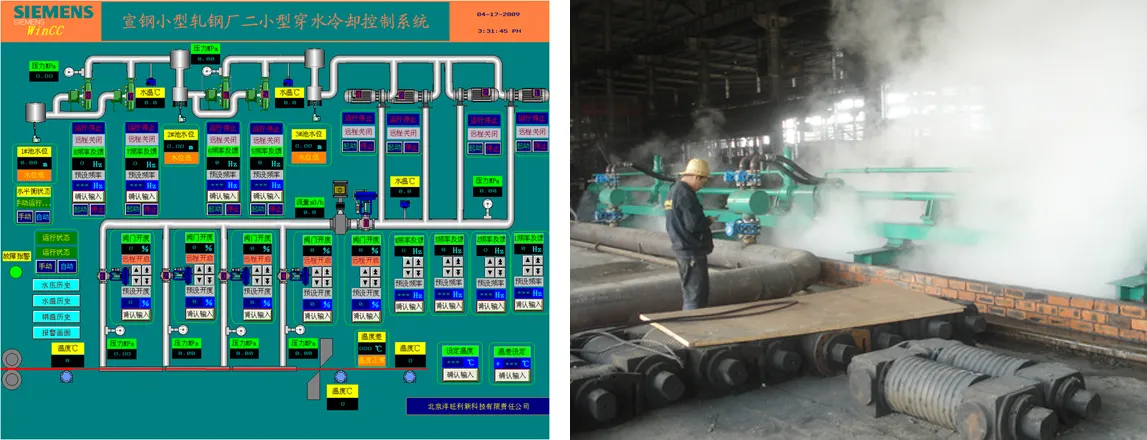 Cold Rolling Cladding Mill - YWLX | Energy-Efficient Metal BondingIntroduction In recent years, the demand for cladding plate and strip has surged, driven by their ability to replace nonferrous materials and stainless steel in industries such as electronics, construction, and automotive. Traditional methods like hot roll bonding cladding and explosive cladding have faced challenges, including low surface quality, high energy consumption, and environmental concer
 -
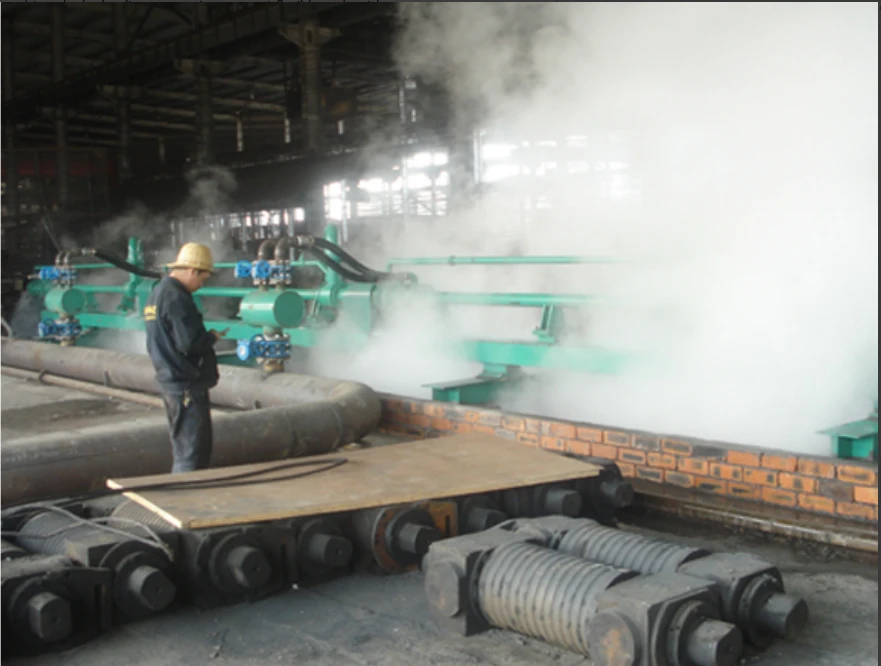 Temper Mill: Key Element in Bright Annealing Line OperationsIn the bustling environment of a rolling factory , the bright annealing line stands as a crucial process for metal refinement. At the heart of this line is the temper mill , also known as the temper pass mill . This specialized equipment plays a pivotal role in the overall success of the bright annealing process. It serves as a vital link between the annealing stage and the subsequent steps in met


